Projects
Pre-Implementation PrEP Delivery Preferences for High-Risk Women
March 02, 2025 - NowPre-Implementation PrEP Delivery Preferences for High-Risk Women This pre-implementation study, functioning as an administrative supplement to a parent grant dedicated to training Caucasus-region implementation scientists, addresses critical public health gaps in Georgia by exploring the barriers and preferred delivery methods for Pre-Exposure Prophylaxis (PrEP) among women at elevated risk of HIV. Currently, PrEP programs in Georgia slow-moving and primarily target men who have sex with men and transgender populations, leaving underserved women - such as female partners of people who inject drugs, female sex workers, transgender women, and women who use drugs - without tailored prevention access. To design a more accessible, women-friendly program that bypasses restrictive requirements like mandatory visits to centralized AIDS centers, this study targets a sample size of 540 women across Tbilisi and Batumi. Recruitment will be conducted in partnership with peer workers and social workers from harm reduction and methadone facilities. Utilizing mixed-methods implementation strategies, the study will conduct nominal group technique focus groups with 40 women to gather qualitative data, followed by computer-assisted personal interviewing with 500 women using a choice-based conjoint experiment. By employing Hierarchical Bayes procedures to systematically analyze trade-offs and calculate attribute relative importance scores, the research team aims to determine precise patient preferences regarding crucial delivery logistics - such as alternative testing or screening venues, adherence support methods, and dispensing timelines - to ultimately inform and optimize future nationwide HIV prevention policies.
Adiquit and AltGeo Partner to Address Smoking in Georgia
January 08, 2024 - NowAdiquit, a leader in e-health innovations, has partnered with AltGeo, the Addiction Research Center in Georgia, to introduce a groundbreaking smoking cessation project in Georgia. This initiative, supported by UNDP, employs the Adiquit system, an AI-powered mobile app designed to offer personalized smoking cessation support.
Specializes in creating digital solutions for addiction and mental health, offering tools like the Adiquit app to support individuals on their journey to quit smoking.
For more information and to join our efforts in creating a healthier Georgia, visit https://www.adiquit.cz/en/home/
The project “Breathe Georgia: Digital Transformation of Smoking Cessation with Adiquit” is implemented by the United Nations Development Programme (UNDP) with the financial support of the Ministry of Foreign Affairs of the Czech Republic.
Project Highlights:
Innovative Approach: Utilizing artificial intelligence and behavioral science, Adiquit app delivers a personalized journey to help users quit smoking, significantly enhancing the effectiveness compared to traditional methods.
Strategic Partnership: Adiquit and AltGeo collaborate to adapt the Adiquit system to Georgia's context, ensuring cultural and linguistic relevance for better user engagement.
Comprehensive Implementation: The project encompasses initial planning, recruitment of participants, continuous monitoring, and detailed data analysis to evaluate the system's impact in Georgia.
Community Engagement: Through an extensive awareness campaign and stakeholder involvement, the project aims to reach a broad audience, encouraging widespread participation and support.
Sustainable Impact: Aligned with Sustainable Development Goals, this initiative aims to reduce smoking rates, improve public health, and contribute to economic development in Georgia.
#CzechUNDP #CzechChallengeFund #Czech #CzechRepublic

The Georgia Medical Cannabis Project (GMCP)
March 31, 2021 - April 30, 2022The Georgia Medical Cannabis Project (GMCP), implemented by Alternative Georgia with the support of the Open Society Georgia Foundation (OSGF), is a 12-month public health and advocacy initiative designed to support the introduction of medical cannabis into Georgia’s healthcare system and establish a sustainable framework for multi-purpose cannabis cultivation. The project aims to benefit approximately 30,000 patients suffering from conditions such as chronic pain, anxiety, PTSD, seizures, and chemotherapy-related nausea, while simultaneously opening up economic opportunities for local farmers and entrepreneurs in the industrial and cosmetic sectors. To build a supportive environment for these reforms, the initiative focuses on lobbying the Parliament, analyzing legal barriers, and conducting surveys to examine public and professional attitudes. Furthermore, the project utilizes workshops, webinars, and international trials to educate healthcare workers, alongside conducting crucial macroeconomic assessments and developing legal safeguard measures to protect local stakeholders from unfair corporate monopolization in the emerging market.
Impact of COVID-19 pandemic on illicit drug markets and drug users’ behavior
April 01, 2020 - NowThere is fragmented information coming from the field workers of harm reduction programs and community representatives that the COVID-19 pandemic started to impact on illicit drug supply and drug consumption practices. We hypothesize that the pandemic will affect illicit drug markets, including online markets, in terms of changing availability, purity, pricing for illicit drugs, and will facilitate changes in drug users’ behaviors in terms of substances consumed (amounts, combinations, route of administration) and ways of obtaining those substances. Georgia and Ukraine are selected for this study due to a number of reasons.
In this prospective cohort study, we recruited 50 regular drug users per country (total n=100) who fill in online questionnaire in every two weeks and have qualitative individual interviews once in 3 months. We will follow them up regularly for 24 weeks (about six months). In addition, individual interviews are conducted with field-experts and stakeholders once a month. Furthermore, we are monitoring online drug market.
Project is funded by European Monitoring Centre for Drugs and Drug Addiction (EMCDDA)
Community policing and drug related harm reduction
January 08, 2019 - NowThe project is being implemented by the Addiction Research Center “Alternative Georgia”. The goal of the project is to develop psychoactive substance use related knowledge and skills of community police officers and support their engagement in addressing drug related problems in communities
The goal of the project is to develop psychoactive substance use related knowledge and skills of community police officers and support their engagement in addressing drug related problems in communities.
Specific objectives of the project are as follows:
1. Assess Georgian regulatory framework (laws, regulations, ministerial decrees) related to community policing; assess knowledge and attitudes of community police officers in relation to substance use
2. Review international experience with community policing, in particular in relation to addressing drug related issues
3. Based on Objectives 1 and 2 propose changes to the regulatory framework in order to enable effective involvement of community police officers with reducing/preventing drug related crime and reducing drug related harms
4. Organize a study visit of representatives of MIA (including community police officers) to learn practical experience in drug related community policing (preliminary to one of EU countries or the US; to be determined later)
5. Develop an educational module for community police officers in order to build their knowledge and overall capacity on approaches and interventions aimed at reducing/preventing drug related crime and drug related harms.
The COMPASS-GE project ("Comprehensive Approach to Integrated and Accessible Mental Health in Georgia")
October 31, 2024 - July 13, 2026The COMPASS-GE project ("Comprehensive Approach to Integrated and Accessible Mental Health in Georgia"), officially launched under the leadership of Global Initiative on Psychiatry-Tbilisi (GIP-T), is a four-year initiative designed to comprehensively strengthen Georgia's mental healthcare system through rights-based, evidence-informed policies and practices. Funded by the European Commission, the project's overall goal is to modernize national mental health legislation, enhance stakeholder capacities, build public literacy, and systematically eliminate coercive institutional practices in favor of care models that respect human dignity. As a vital consortium partner, Alternative Georgia leads the project's Addiction Integration Cluster, managing a dedicated two-year component aimed at bridging the historical gap between the addiction and mental health fields. AltGeorgia is specifically responsible for conducting comprehensive situation and needs assessments, collaboratively developing an strategic integration Action Plan aligned with national strategies, and building institutional capacity through accredited workshops. Their work focuses on developing specialized toolkits, treatment protocols, and ongoing clinical mentorship to significantly enhance the capability of healthcare personnel to accurately diagnose and provide integrated care for individuals with co-occurring mental health and substance use disorders (dual diagnosis).The PRIDE (Prison-related Research, Intervention Development and Evaluation) project
January 07, 2024 - NowThe PRIDE (Prison-related Research, Intervention Development and Evaluation) project—specifically its third generation, PRIDE 3 - is a multi-national implementation science network focused on scaling up opioid agonist therapies (OAT) as a primary method of HIV prevention and treatment within criminal justice settings across Eastern Europe and Central Asia (EECA). Operating in countries with some of the highest incarceration rates globally, the project expands its collaborative scope to include new institutional partners in Georgia (Alternative Georgia) and Tajikistan, alongside established networks in Ukraine, Moldova, and Kyrgyzstan. The project relies on the EPIS (Explore, Prepare, Implement, Sustain) framework paired with the evidence-informed NIATx process improvement model to deploy tailored interventions across closed environments, pretrial detention centers (SIZO), and newly formed probation systems. To overcome entrenched societal, inter-professional, and institutional barriers against OAT, the initiative employs rapid-cycle Plan-Do-Study-Act (PDSA) changes and Project ECHO tele-education loops to effectively cross-train non-specialty prison and probation personnel. By mapping treatment workflows, improving entry efficiencies, optimizing medication dosages, and securing transition continuums back into community-based settings upon release, the project seeks to align public safety and public health mandates while mitigating the volatile syndemics of injection drug use, OUD, and HIV in the region.
Supporting Human Security, Rights-Based Drug Policy, and Integrated Care Systems in Georgia (Care, Prevention and rights (CPR))
January 07, 2021 - March 30, 2025This comprehensive initiative aims to increase human security and safety in Georgia by fostering a human rights-based drug policy and enhancing the country’s crime and drug prevention, treatment, and care systems. Operating across six distinct yet interlinked specific objectives, the project implements a logical progression of interventions that begin with needs assessments and regulatory framework updates - including new service standards, delivery guidelines, and clinical protocols. These steps are systematically followed by evidence-based professional education, public perception surveys, and strategic networking. The action spans multiple sectors to build cross-cutting institutional capacity: it trains law enforcement and educational personnel to manage violent behaviors; expands healthcare capacity to deliver integrated mental health and youth substance use disorder (SUD) services; introduces international prevention curricula in schools, media, and nightlife facilities; reframes national drug legislation via public advocacy and legal support; and directly strengthens local civil society organizations (CSOs) through targeted sub-grants and organizational capacity building.
AltGeorgia's Role AltGeorgia was directly responsible for Specific Objective 4 (SO4), leading the efforts to build the capacity of the healthcare system to timely identify, engage, and provide client-centered, effective treatment and care. In this vital role, AltGeorgia focused on introducing integrated care approaches and ensuring a continuum of care for individuals with substance use disorders. To achieve this, the organization was tasked with strengthening the primary healthcare system through the introduction of age-sensitive clinical protocols and educational programs. Furthermore, AltGeorgia worked to enhance collaboration between primary healthcare and specialized SUD services, develop updated clinical guidelines and online training modules, and introduce standardized patient assessment and monitoring tools. These targeted activities directly addressed critical knowledge and skill gaps among professionals working with people who use drugs (PWUD), including vulnerable children and youth experimenting with or at risk of drug use.
AltGeorgia’s Key Outputs Under SO4 – clinical protocols, guidelines and training modules are available on CPR portal
https://cpr.ge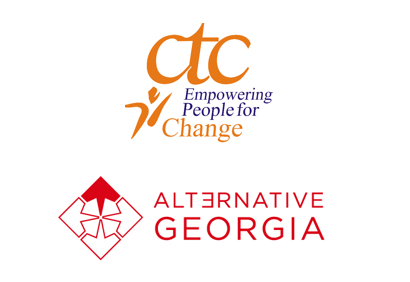
Access to Opioid substitution treatment in Georgian penitentiary system
July 01, 2019 - January 31, 2020Opioid Substitution Treatment (OST) is effective intervention for people who inject drugs (PWID). While access to OST is increasing in civil sector, it still remains limited in Georgian penitentiary system. Georgian prisons provide OST to PWID for 3-5 months with the final goal of detoxification. Project aims to examine barriers and challenges faced by PWID in Georgian prisons through the investigation of experiences shared by former beneficiaries involved in penitentiary system’s OST and experts working in the field. Additionally, project team will analyze Georgian regulatory framework, international standards and recommendations in order to increase access to OST in penitentiary system. Seven-month project is funded by Center for Training and Consultation (CTC).
Georgia Syringe Vending Machine Trial (GSVMT)
April 02, 2018 - NowNeedle and syringe programs (NSP) are evidence-based intervention to prevent HIV infection among people who inject drugs (PWID). Syringe Vending Machines (SVM) are cost-effective intervention to supplement the standard NSP, to reach hard to reach groups, and to cover un-served geographical areas. The aim of the ongoing parent implementation trial is to evaluate the implementation process (and effectiveness) of SVM and to increase access to sterile injection equipment for PWID in Tbilisi, Georgia.
With partnership of National Center for Disease Control and Public Health (NCDC) and Georgian Harm Reduction Network (GHRN), Alternative Georgia is implementing SVMs which work 24/7 and provide sterile injection equipment, condoms, Naloxone kit, contact information and educational brochures for PWID.
The project is supported by the 5% Initiative implemented by Expertise France and funded by the French Ministry of Europe and Foreign Affairs and co-financed by The Global Fund.